Enterprise campaign optimization

Make every email launch look engineered, not guessed.

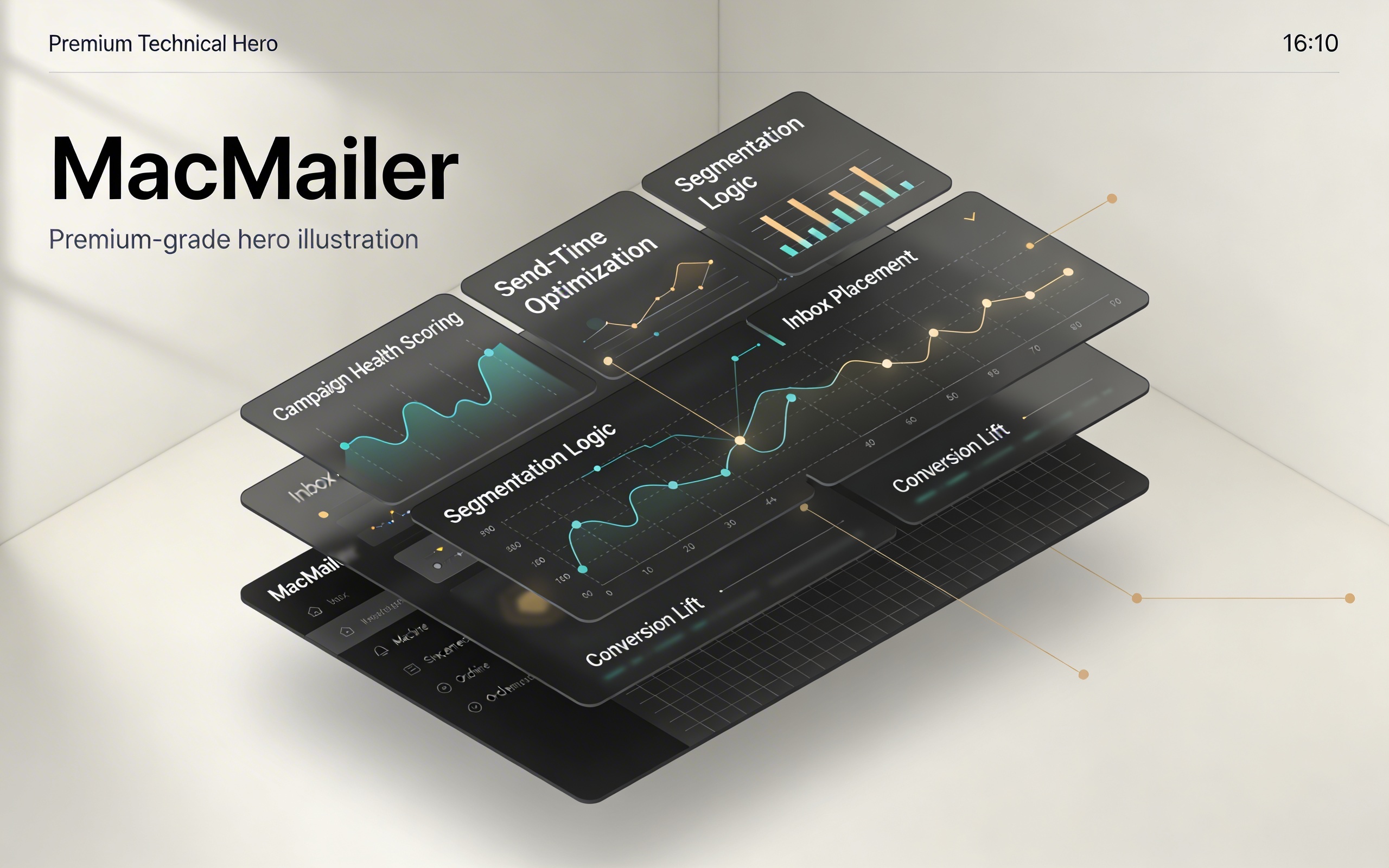
MacMailer gives growth teams a technical control layer for send-time intelligence, audience precision, inbox readiness, and performance forecasting.

91Unified campaign readiness score
18%Typical click-lift opportunity surfaced
Faster pre-send review cycles
Technical product illustration showing enterprise email campaign optimization panels and system routing visuals
Send windowTue 9:10 AMHighest projected inbox placement across the active segment.
Optimization delta+7.2% CTRSuppression and timing adjustments identified before launch.
Used by product-led email teamsTrusted by operators running complex campaign calendars and fast review cycles.
Built for marketing operationsDesigned for teams that care about cadence, segmentation discipline, and launch QA.
Enterprise-style review layerClear operational signals, tighter approvals, and fewer avoidable campaign mistakes.
Responsive by defaultOptimized for desktop presentations and mobile browsing without clipped actions or hidden controls.
Platform

A premium product story built around technical signal

This homepage now keeps legal content out of the main scroll and pushes it into dedicated pages, which is a standard pattern for cleaner site structure.

Preflight campaigns across timing, segmentation, deliverability, and conversion intent.

MacMailer is framed as a decision layer for marketers and operators who need a faster way to qualify email launches.

Audience conflict analysisDetect overlap, recency, and duplicate targeting pressure across active campaigns.
Inbox readiness scoringSurface subject-line, frequency, and send-volume risks before deployment.
Performance forecastingEstimate likely lift from segmentation, suppression, or timing changes.
Approval workflow clarityGive leadership and ops teams one concise review layer before launch.
99.9%Rules coverage across repeatable pre-send checks, campaign scoring, and launch review workflows.
Primary use caseEmail campaign optimization
Decision inputsTiming • Segment • Deliverability • Copy
Target buyersGrowth teams • Agencies • Marketing ops
Presentation styleEnterprise-grade • Minimal • Technical
Architecture

Structured like a real optimization system

Technical presentation matters for enterprise trust, so the homepage keeps its focus on product and architecture while legal information lives on separate pages.

Input layerCampaign metadata, segment definitions, historical engagement, and schedule context.
Analysis layerReadiness scoring, duplicate audience detection, send-window modeling, and deliverability checks.
Output layerPrioritized recommendations for suppression, timing changes, segmentation cleanup, and approval notes.
Signal node 01Audience model

Evaluates overlap, recency, and sequence pressure before launch.

Signal node 02Timing engine

Compares schedule options against expected responsiveness windows.

Signal node 03Inbox control

Flags delivery risks, content anomalies, and volume imbalance.

Signal node 04Action layer

Outputs ranked changes with measurable projected impact.